Most habits fail not because people lack willpower, but because there’s no system catching them the moment motivation dips, which happens to everyone eventually. A good habit tracker doesn’t rely on willpower at all, it builds a visible streak, a small reward, or a simple daily prompt that makes skipping a day feel more costly than just doing the thing. The differences between habit trackers come down to how they handle motivation, whether through gamification, minimalism, or social accountability, and picking the wrong style for your personality is often why previous attempts didn’t stick. Here are five habit tracker apps in 2026 worth trying, each built around a different psychological approach to consistency.
Habitica
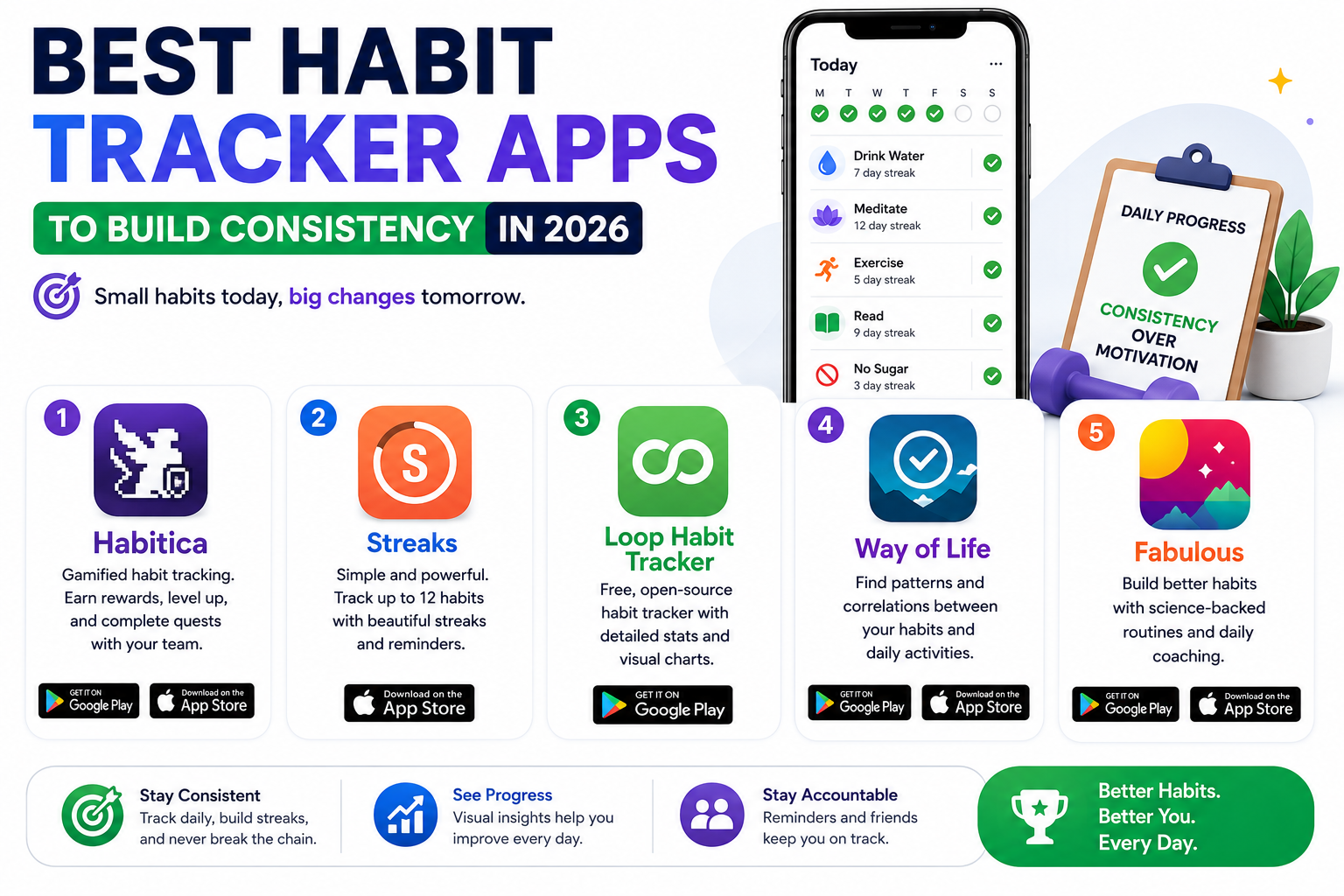
Habitica turns your entire to-do list and habit tracking into a role-playing game, where completing tasks earns experience points and in-game rewards while missing them costs health. It’s a genuinely effective approach for people motivated by game mechanics, and its party system lets friends hold each other accountable inside the same virtual quest.
Streaks
Streaks keeps things deliberately simple, tracking up to twelve habits at once with a clean visual streak counter and Apple Health integration for fitness-related goals. Its minimalist design appeals to people who find gamified apps distracting rather than motivating.
Loop Habit Tracker
Loop is a free, open-source habit tracker for Android that shows a visual chart of your consistency over time, making long-term patterns genuinely easy to spot at a glance. It’s ad-free and doesn’t require an account, which appeals to privacy-conscious users who don’t want habit data tied to a cloud service.
Way of Life
Way of Life focuses on identifying patterns between habits, letting you tag days and later see correlations, like noticing that skipped workouts tend to follow poor sleep. That extra layer of insight makes it a strong pick for people who want to understand why a habit keeps slipping, not just track that it did.
Fabulous
Fabulous wraps habit building into structured, science-backed routines and coaching journeys rather than a blank tracker you fill in yourself, which works well for people who want more guidance on what habits to build and in what order. Its morning and evening routine templates are a particularly popular starting point for new users.
Matching the App to Your Personality, Not Just the Habit
The single biggest reason habit trackers get abandoned within a few weeks isn’t the app itself, it’s a mismatch between the app’s motivational style and what actually works for the person using it. Someone who finds gamification silly will quietly stop opening Habitica within days, while someone who needs external structure will abandon a blank, minimalist tracker like Loop just as fast without any prompts nudging them along. Before committing to one, think honestly about what’s made past habits stick or fail, visual streaks, social accountability, guided structure, or pure data, and pick the app built around that specific lever rather than whichever one has the best reviews in general.
No habit tracker does the actual work for you, but the right one removes just enough friction and adds just enough accountability that showing up becomes the path of least resistance instead of a daily decision. Start with just two or three habits rather than overloading the app on day one, tracking too much at once is one of the most common reasons people quit within the first week regardless of which app they chose