A static website is useful for showing company information, services, contact details, and portfolio pages. But today, users expect more than simple pages. They want quick answers, guided experiences, helpful content, and easy ways to connect with the business.
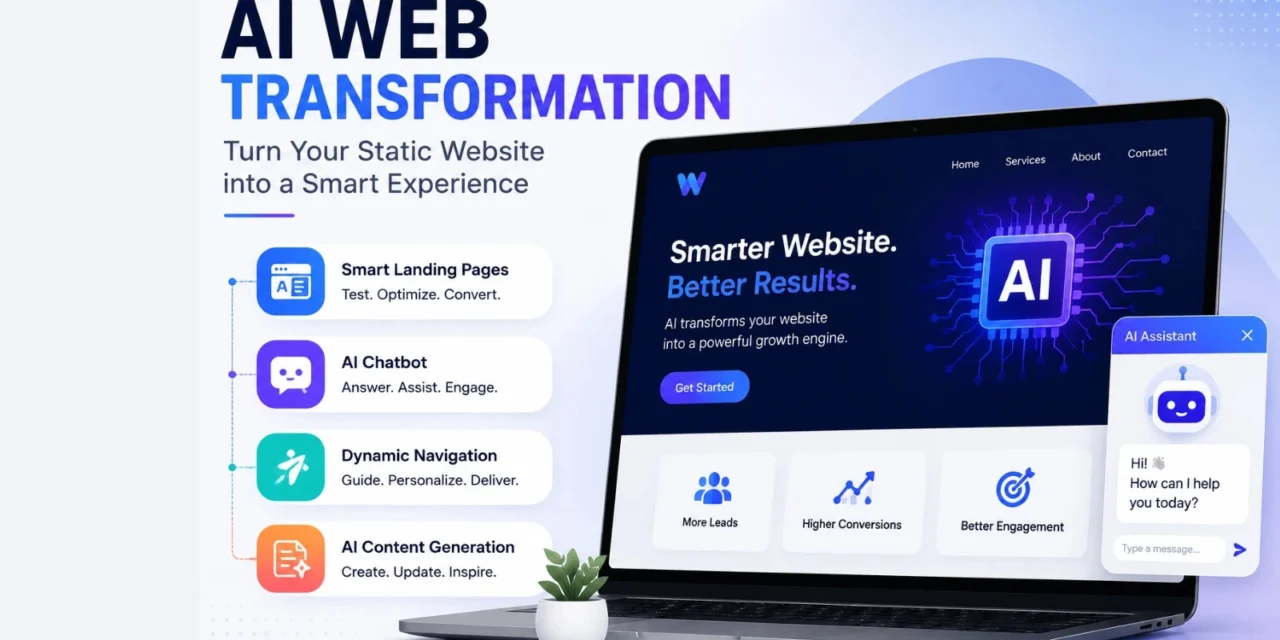
AI web transformation means upgrading a normal website into a smarter website. It does not always mean rebuilding everything from scratch. In many cases, businesses can add AI-powered landing pages, chatbots, dynamic navigation, and content tools on top of their existing website.
For app users, this creates a better browsing experience. For app developers and businesses, it creates more leads, better engagement, and stronger conversion.
Test & Refine Landing Pages and Lead Capture Forms
Landing pages are very important for digital marketing. A small change in headline, form length, button text, or page layout can affect conversion. AI can help test different versions and send visitors to the page that is more likely to convert.
Unbounce is a good commercial example. Its Smart Traffic feature uses AI to route visitors to the landing page variant that is more likely to convert based on similar visitor attributes. Unbounce says marketers using Smart Traffic get more sales and signups on average.
AI can also improve lead capture forms. It can suggest shorter forms, better field order, stronger calls to action, and personalized messages. For a static website, this is one of the easiest ways to start AI transformation.
Integrate Chat Bot
A website visitor may have questions before contacting the business. If the website does not answer quickly, the visitor may leave. An AI chatbot can answer common questions, collect leads, recommend services, and guide users to the right page.
Intercom’s Fin is a strong example of an AI customer service agent. Intercom describes Fin as an AI bot designed to answer customer questions and support teams at scale.
For a business website, an AI chatbot can answer questions like pricing, service details, booking steps, support process, and product features. This makes the website active even when the team is not online.
Design Guided Dynamic Navigation
Traditional websites show the same menu to everyone. But not every visitor has the same goal. A startup founder, developer, customer, investor, or job seeker may need different information.
AI can help create guided dynamic navigation. Based on user behavior, page visits, location, device, or selected interest, the website can suggest the next best page. For example, a visitor reading about mobile app development may be guided to case studies, pricing, and consultation forms.
Adobe’s business tools focus on AI-powered content, data, and experience optimisation for marketing workflows, showing how large platforms are moving toward intelligent digital experiences.
For developers, this creates an opportunity to build websites that feel more like guided apps than static brochures.
Use Generative AI to Create Content
A static website often becomes outdated because teams do not regularly update content. Generative AI can help create blogs, FAQs, service pages, product descriptions, social posts, and email content.
Jasper is a commercial example focused on AI agents and content workflows for marketing teams. It helps marketers create and scale content while keeping workflows organised.
For businesses, this means faster content creation. For developers, it means they can build AI content modules inside CMS dashboards, admin panels, or marketing tools.
Conclusion
AI web transformation can make a static website more useful, interactive, and conversion-focused. By adding AI landing page testing, smarter lead forms, chatbots, guided navigation, and generative content, a simple website can become a digital sales assistant.
For app developers, this is a strong opportunity to build AI-powered website tools. For business owners, it is a practical way to improve user experience and generate better leads. A static website idea can become a smart software experience when AI is added with clear purpose.